PACS Partner’s Message to Students: Love Shouldn’t Hurt
With support from the Women’s Center & Shelter of Greater Pittsburgh, PACS helps students recognize red flags, build respect and shape healthier relationships.
October 21, 2025
Whether it's helping students explore a variety of educational and career paths for their future, or working with them to develop studying and time management skills, educators at Passport Academy Charter School embrace a hands-on approach to preparing students for life after high school. PACS applies this same approach to help students flourish in other areas of students’ lives, too. One way students are supported beyond academics is through PACS’ partnership with the Women’s Center & Shelter of Greater Pittsburgh (WCSGP) which aims to educate students on the qualities healthy relationships share (like respectful communication) - and potential red flags of abusive ones (like tracking a partner’s location).
PACS is one of only seven schools that benefit from a grant bringing prevention education directly into the classrooms. The grant focuses on educating students about teen dating violence, domestic violence and safety planning. PACS takes it one step further by embedding education facilitators in the school building, which allows students access one-on-one counseling and onsite group planning while at school.
“Passport Academy has the ideal set up for our programming,” said Amy Burleson, one of the education facilitators who runs the programming. “They not only have the physical space and flexibility to accommodate us, they understand how critical it is for students to understand what healthy romantic relationships, friendships and families look like.”
One of the programs the WCSGP grant supports is “Expect Respect,” a bi-weekly conversation that focuses on how to have healthy relationships and open communication. Burleson and her colleague, Alexa Miller, talk with students about the different forms abuse can take, including physical abuse, verbal abuse, financial control and digital stalking.
“With young adults in particular, we really want them to understand the way phones and social media can be used as a way to control and abuse a partner,” said Miller. “It’s a big red flag when a partner insists on tracking your location, for instance. We also see a lot of catfishing—partners creating fake profiles to keep track of their girlfriend or boyfriend—which can be dangerous.”
The programming also talks about the elements of healthy relationships, whether those relationships are romantic, platonic or familial. Some of these elements include respect, trust, open communication, honesty and support. These relationships feature clearly defined boundaries, individual independence and the ability to work through conflict and compromise.
“One thing we reiterate to the students all the time is love shouldn’t hurt,” said Miller. “That means physically and emotionally.”
PACS principal Joe Oliphant sees firsthand how students benefit from having easy access to these trained and compassionate professionals.
“The fact that Amy and Alexa are able to spend time onsite at the school and meet with students in groups as well as individually is incredible,” Oliphant said. “We know that the earlier we can reach students and help them understand the different forms abusive relationships can take, the more informed, confident and safe they can be in all of their relationships.”
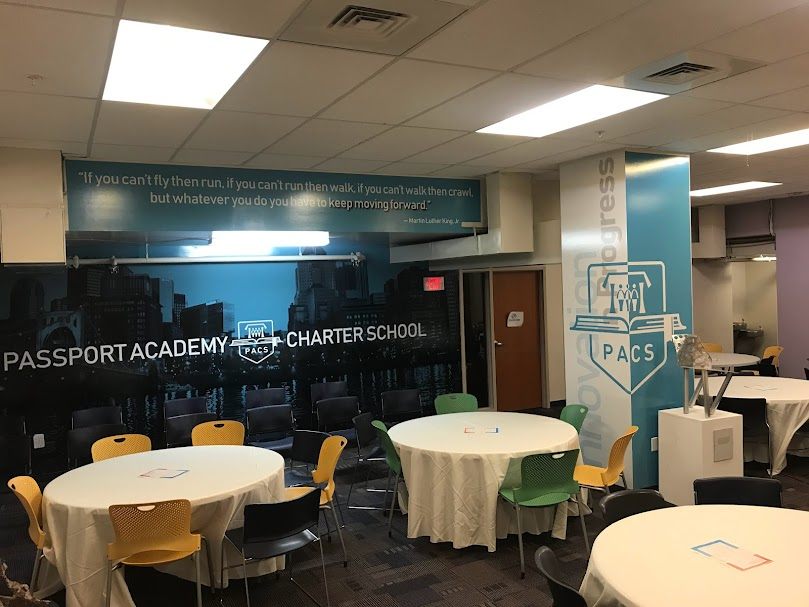
Women’s Center & Shelter offices are located in the Co-Lab space on the first floor of PACS. The Co-Lab space connects students with life-changing community resources they can access without having to leave school.
If students or families would like additional information, reach out to any of the support team available or visit Ms. Burleson during her office hours.